
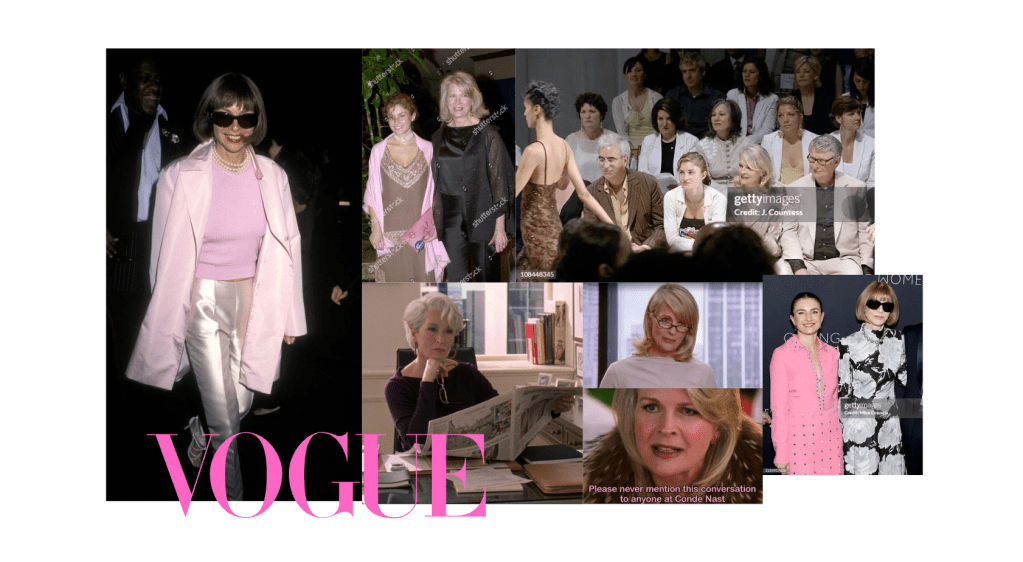
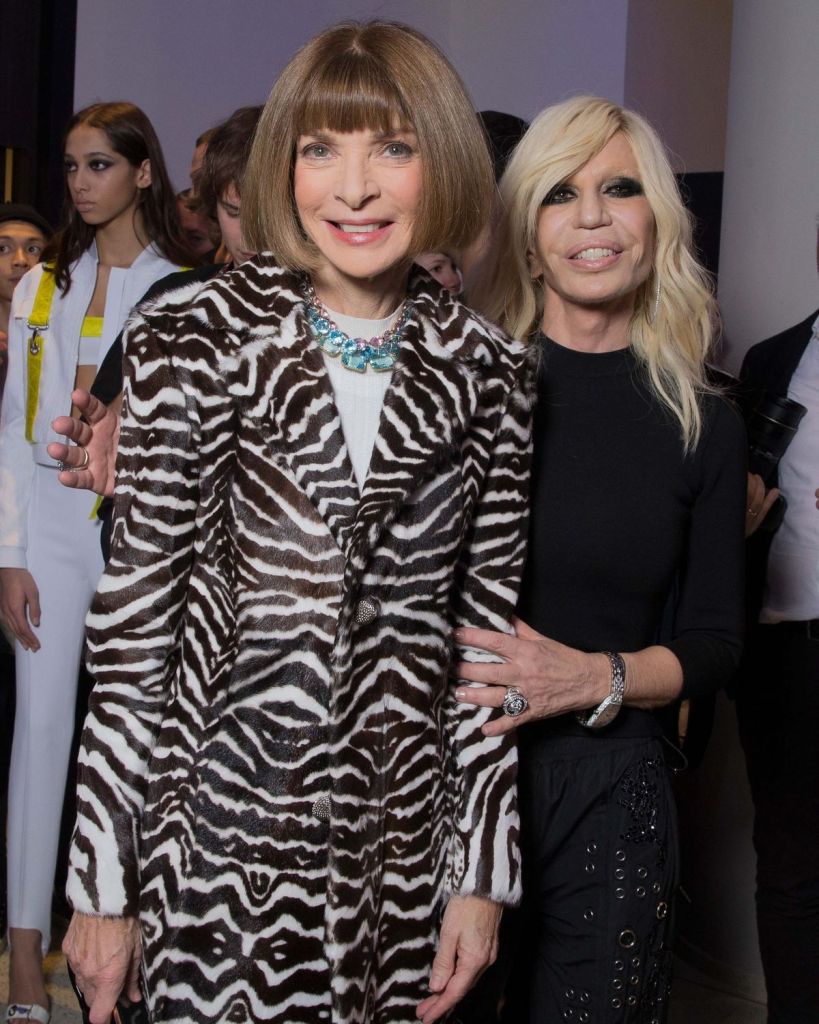
For 37 years, Anna Wintour’s bob and oversized Chanel shades have been as much a part of Vogue as glossy pages and September issues. She didn’t just edit a magazine — she defined the modern fashion era. Think: the Met Gala transforming from a society dinner into the Oscars of fashion, or Vogue covers that launched careers faster than a Tom Ford runway debut in 2003.
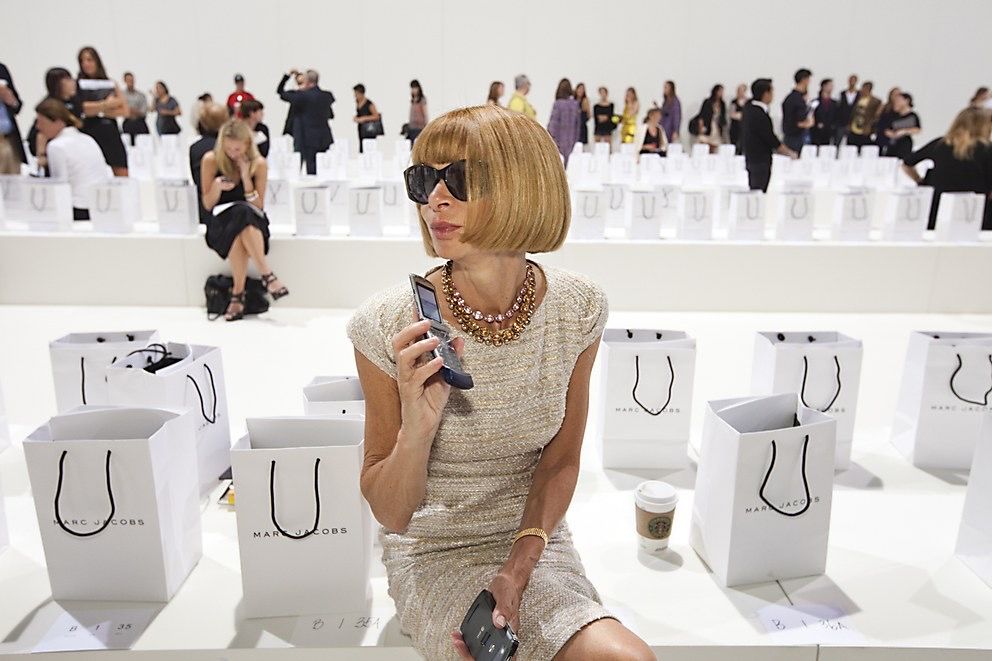
But in true Wintour style, she isn’t simply “retiring.” No, no — she’s trading the daily edit meetings for a more global, big-picture role as Vogue’s Global Editorial Director and Condé Nast’s Chief Content Officer. Translation: she’s still the most powerful woman in fashion, but she’ll leave the U.S. day-to-day to someone new. At least, that’s the official line. Industry whispers suggest Anna isn’t even moving out of her office at One World Trade, and that the final word — on covers, on strategy, on all things Vogue — will still be hers. Which means the incoming editor may have the dream job title, but they’ll also be working under the longest shadow the fashion world has ever known. And yet, even with Wintour’s presence still looming, it’s undeniably the fashion job every girl dreams about.
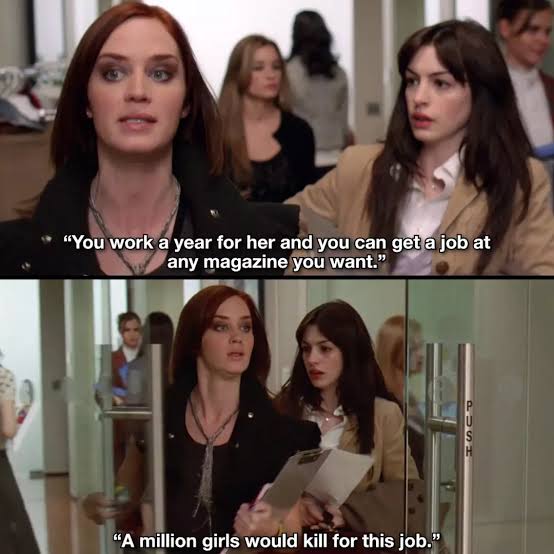
To call this the ultimate fashion job is an understatement. This is the role — the one every girl who ever quoted “a million girls would kill for this job” from The Devil Wears Prada has daydreamed about. Front-row seats, iconic spreads, the power to make or break a trend with a single email. It’s not just a job — it’s fashion’s crown jewel. And now, after Anna Wintour’s legendary reign, someone new is stepping into those sky-high stilettos.
On September 2, 2025, Vogue crowned its new U.S. editorial head: Chloe Malle, 39. She’s not a total outsider swooping in with a fresh Birkin — she’s been part of the Vogue world since 2011, working her way through social editor gigs, digital strategy, podcasts, and events. In other words, she knows how the Vogue machine ticks.
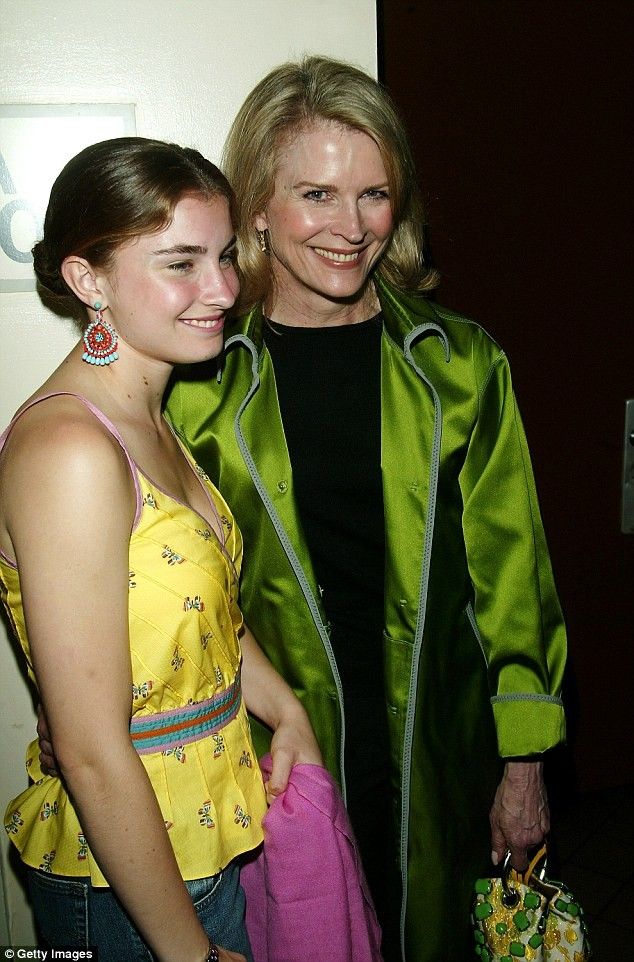
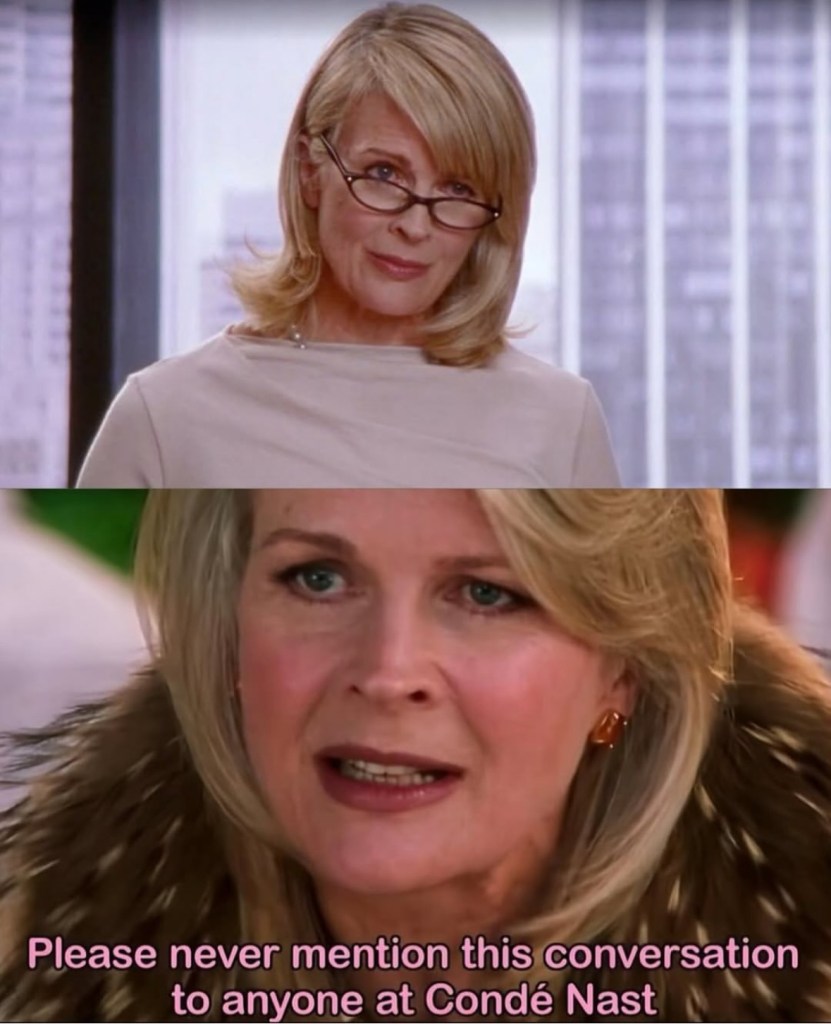
And here’s where it gets deliciously pop-culture: Chloe’s mom is none other than Candice Bergen. Yes, Murphy Brown herself. And for those of us raised on Y2K comedies? She’s also Kathy Morningside, the icy villain of Miss Congeniality — the pageant queen puppet-master with a smile as sharp as stilettos. Remember her pearl-clutching perfectionism while Sandra Bullock stuffed donuts into her bra? That’s Chloe’s fashion lineage. And as if that weren’t enough, Bergen even made a cameo in Sex and the City as Vogue’s Editor-in-Chief — a role that now reads like a stylish bit of foreshadowing
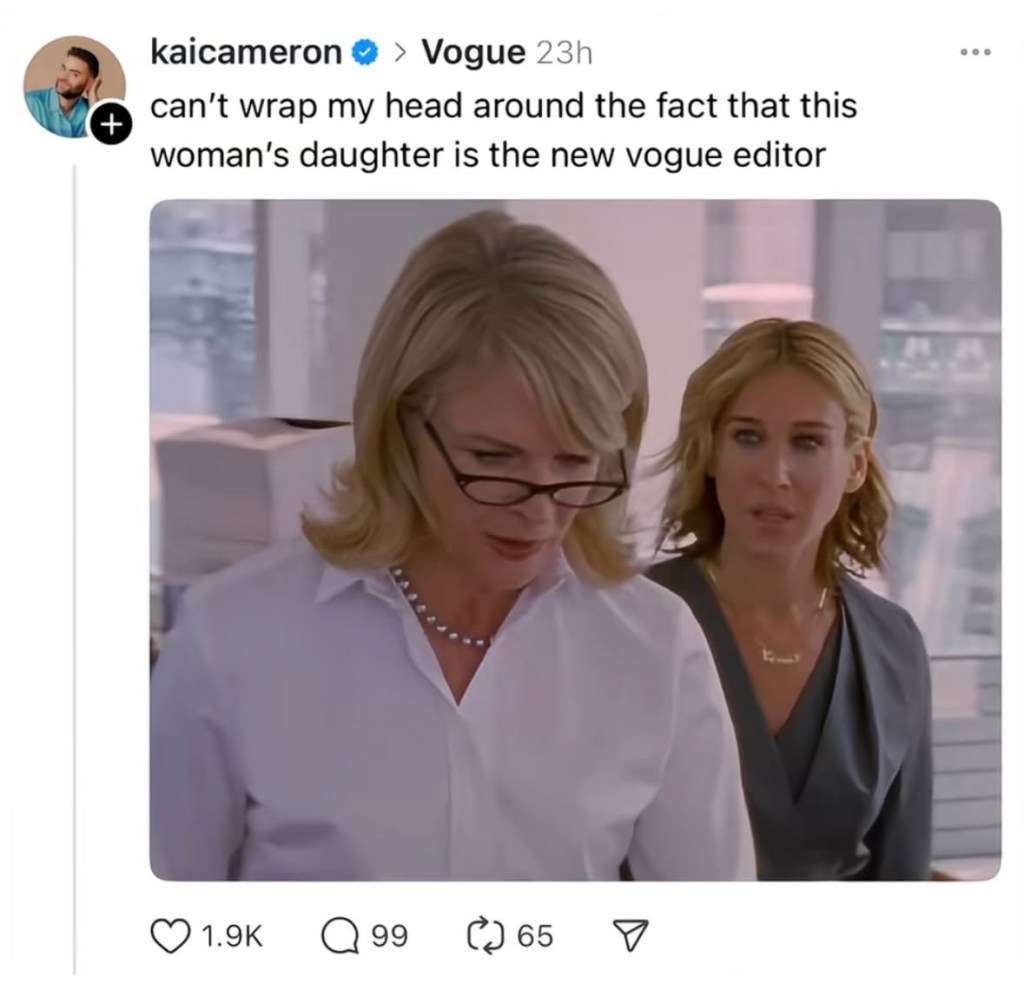
It’s no wonder Chloe embraces the “nepo baby” label. She admits it openly — a proud nepo baby, in fact. But unlike the Kathy Morningside school of ruthless beauty queens, Chloe’s worked behind the scenes for years at Vogue. She first joined Vogue in 2011 as a social editor, covering everything from weddings to society parties, before moving into roles as a contributing editor and sittings editor. By 2023 she was running the digital side as editor of Vogue.com, even co-hosting the magazine’s podcast The Run-Through. She may have inherited some star power, but she also put in the editorial hours.
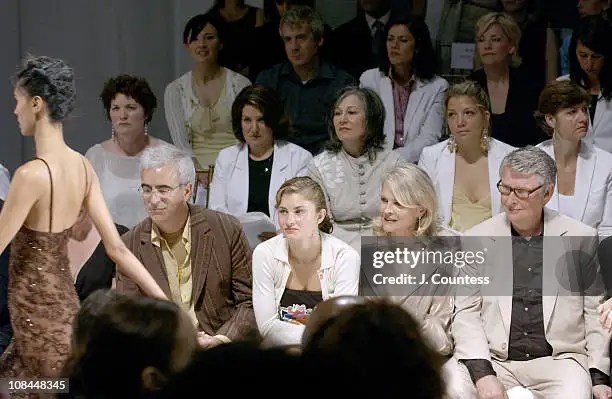
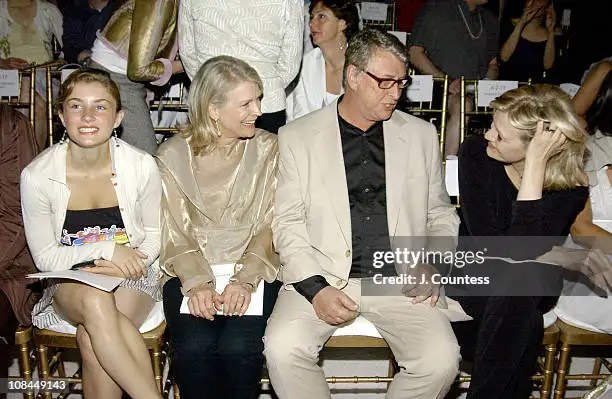
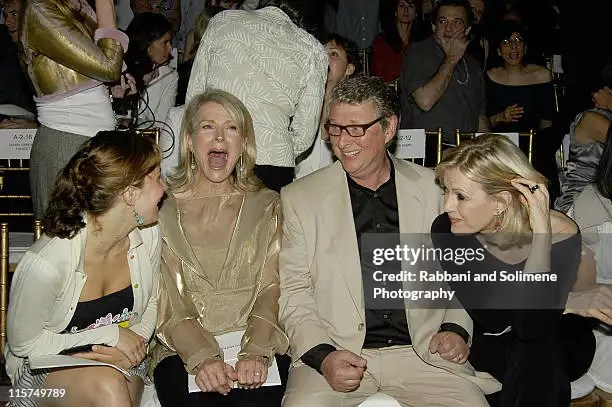
In fashion, nepotism is almost as common as a Fendi Baguette on Sex and the City. Models, editors, designers — so many come with famous surnames. The internet (naturally) has Opinion. Some say this choice proves the industry still runs on insider privilege. Others note that she’s been at Vogue since 2011, putting in her time, learning every platform from print to podcasts. Even Anna herself has stepped in, insisting Chloe “had to prove herself.” Which, if you’ve ever watched The Devil Wears Prada, sounds a little like Miranda Priestly reminding us, “Everyone wants this.”
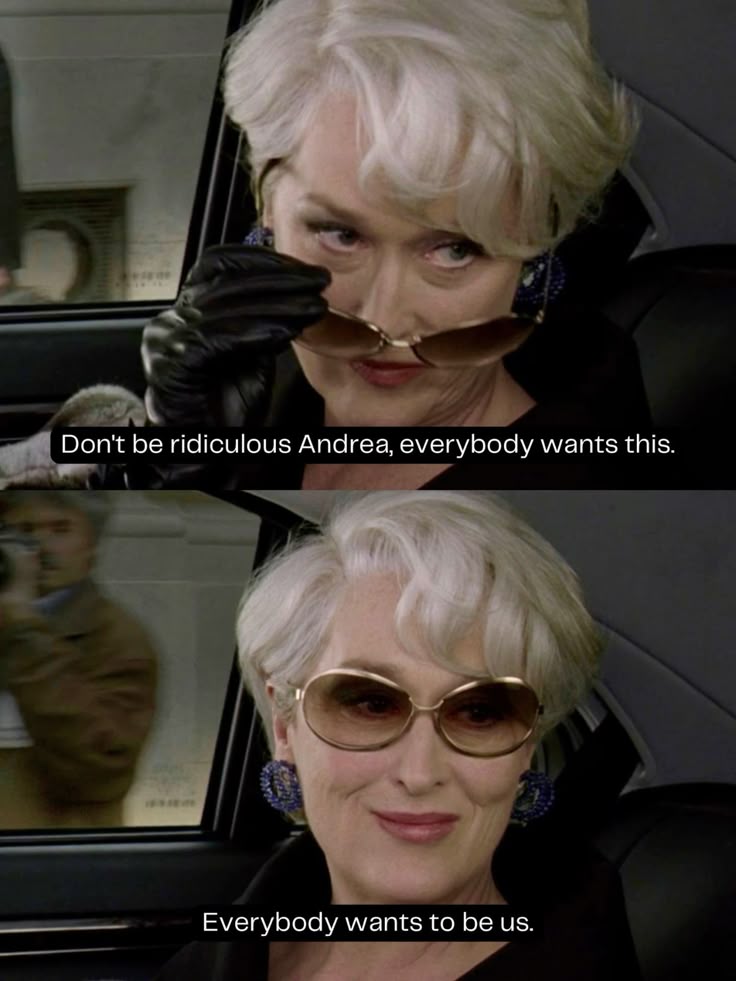
Let’s be clear: stepping into Wintour’s stilettos is not for the faint of heart. Anna Wintour didn’t just edit covers — she set the tone for the entire fashion world. Designers bent over backwards for her approval. Celebrities considered a Vogue cover the ultimate coronation. She was the North Star of fashion. So Chloe’s challenge? She has to honor that legacy and bring Vogue into its next era. More digital, more diverse, more global. Less gatekeeping, more conversations. It’s like inheriting the world’s most fabulous Birkin bag: thrilling, but how do you carry it without looking like you borrowed it from your mom?
This isn’t the end of Anna Wintour — her sunglasses still cast a very long shadow. But it is the start of a new chapter. Whether the new editor will reinvent Vogue for a TikTok world, or simply give it a fresh gloss while keeping the old DNA, remains to be seen. What she has promised so far is fewer issues, but ones that feel more exclusive and collectible, backed by stronger fashion analysis and a sharper digital presence. One thing’s for sure: all eyes (and iPhones) will be watching. Because if Anna Wintour taught us anything, it’s that fashion is always about the next look.
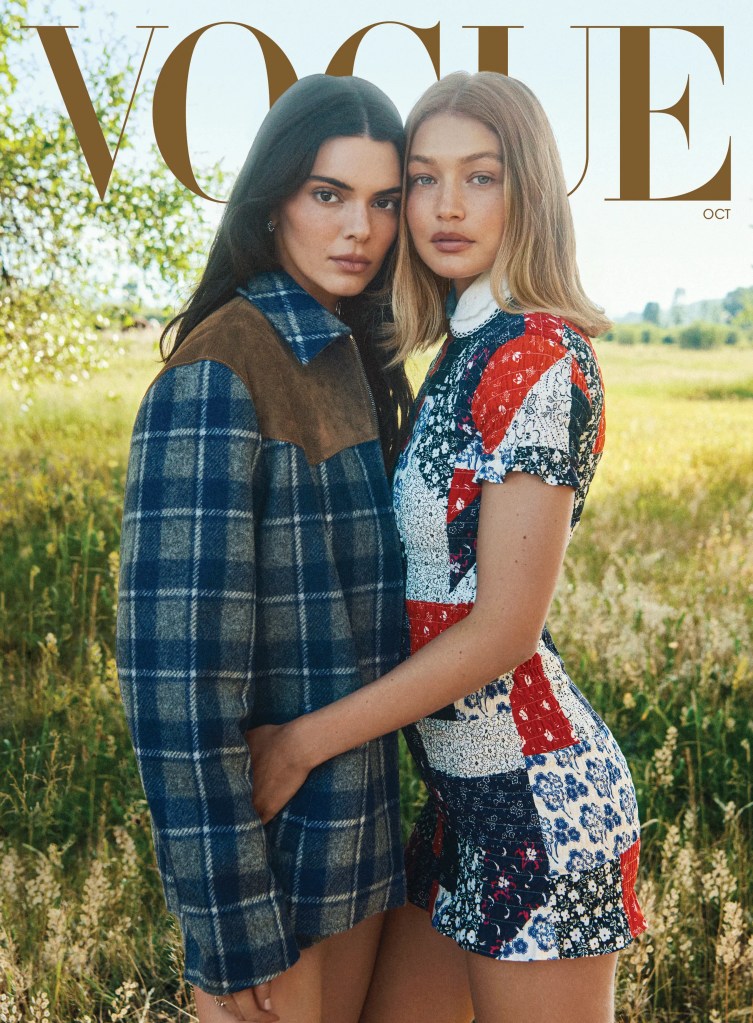
Every new Vogue editor’s debut cover is like a runway opening look: it sets the tone, declares a vision, and whispers (or screams) where things are headed. So when the October 2025, Chloe Malle’s very first cover dropped — featuring Kendall Jenner and Gigi Hadid in a sun-drenched field — the fashion world leaned in, ready for a mic-drop moment.
Instead, what we got was… nice. Pretty. Polished. Two of the most famous models in the world wrapped in Americana-lite styling: Kendall in a plaid jacket with suede shoulders, Gigi in a patchwork minidress. It’s giving farmcore chic, like a Ralph Lauren ad that wandered barefoot into Coachella. But let’s be honest — it’s hardly groundbreaking. Gigi already has more than 50 international Vogue covers to her name, Kendall 13, and the visuals don’t exactly shock. Kendall on a horse? Groundbreaking. Gigi on a farm? Wow. (Insert ironic slow clap.)
But to be fair, Chloe isn’t doing this alone. Vogue covers are never the work of just one person — they’re shaped by committees, creative directors, photographers, stylists, and yes, the approval of Anna herself. So while the debut might feel safe, it’s not entirely fair to pin the whole thing on her shoulders. She’s stepping into a machine that’s been running for decades, and learning to steer it while the former driver is still very much in the passenger seat. So maybe we give her a little slack — first covers are rarely revolutions, but they can set the stage for what’s to come.
And honestly — how iconic wouldn’t it have been to put Anna herself on the cover? After 37 years, the woman who was Vogue, fronting the magazine one last time as she passed the torch. Sunglasses, bob, maybe a wry smile. It would’ve been meta, dramatic, and unforgettable — the kind of fashion history moment that lives on every moodboard forever. Instead, we got Kendall on a horse and Gigi on a farm.
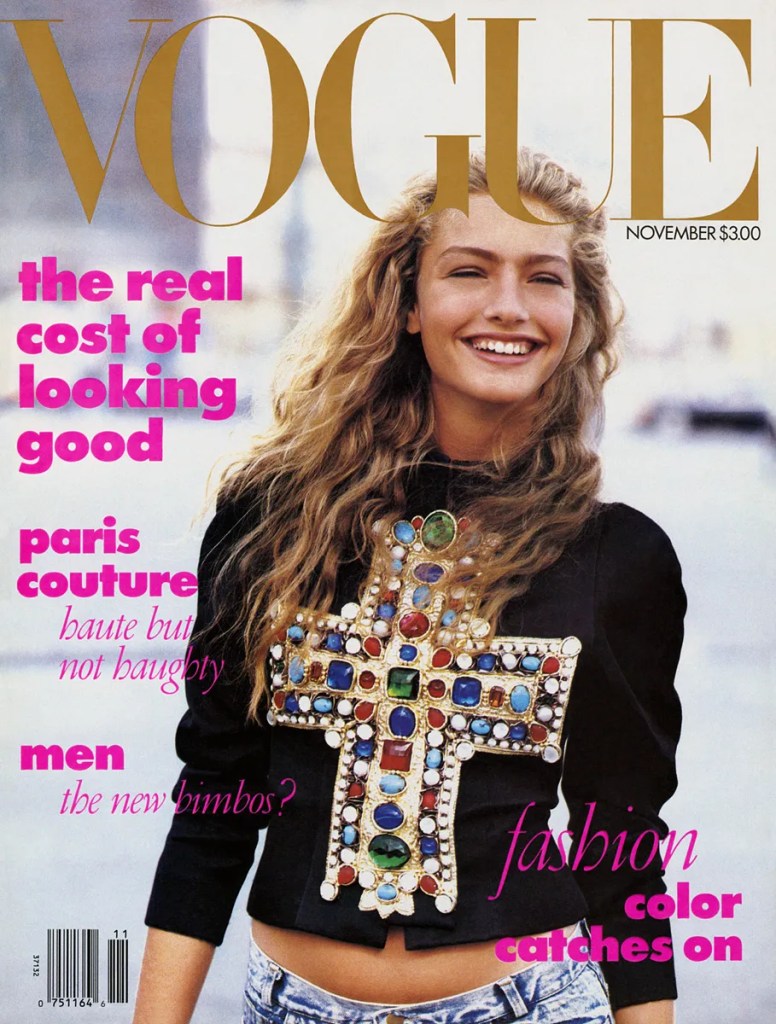
And that contrast matters, because when Anna Wintour made her debut as Vogue’s editor-in-chief in November 1988, she didn’t play it safe. Her very first cover shocked the fashion world: Israeli model Michaela Bercu in a jewel-encrusted Christian Lacroix couture top — paired not with an evening skirt, but with faded Guess jeans. Couture meets denim. High fashion colliding with everyday style. It was nothing short of revolutionary, ripping Vogue out of its ivory tower and planting it firmly on the city streets. That cover wasn’t just an image — it was a manifesto for a new era.
Anna Wintour’s early covers were statements: sharp, glossy, impossible to ignore. Chloe’s debut feels safer, more Instagram-friendly, more like a moodboard than a manifesto. Yes, Kendall and Gigi guarantee clicks and visibility. But where’s the risk? The unexpected? The gasp-out-loud energy we secretly crave from Vogue? Still, maybe that’s the point. Chloe Malle knows she’s inheriting a legacy that looms larger than a Met Gala staircase. Maybe starting soft, grounding her first cover in familiarity and beauty, is her way of saying: I understand the audience, I respect the brand — but watch this space.
So is it groundbreaking? Not really. Is it disastrous? Absolutely not. It’s a careful first step — Vogue in a field, literally and figuratively. The real question is whether Chloe will take bolder strides in the issues to come. Because in fashion, safe is fine for the rehearsal… but the runway always demands more.
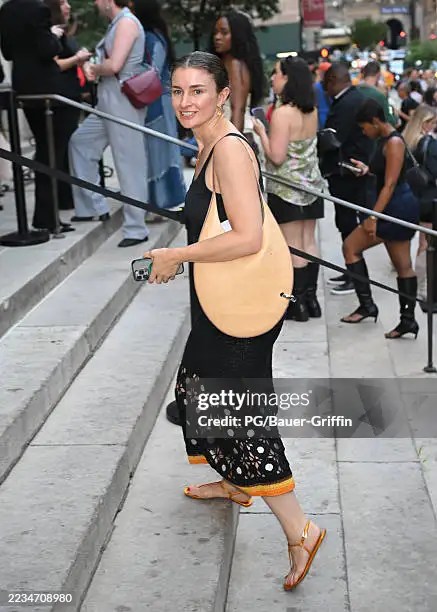
She’s already facing backlash for her style — especially the look she stepped out in on September 13 in New York, just days after landing the most prestigious job in fashion. But here’s where I’m actually going to defend her, and I’ve got receipts.
First of all: her role isn’t to be the muse. Her role is to create the muse. Okay, fine — when you’re Vogue’s new boss, you do have to look a little polished. But let’s be real: have you ever seen your favorite designers wearing their own runway looks? Most of the time they’re in head-to-toe black, and that’s it. Second, let’s not pretend Anna’s style has been bulletproof. Wintour’s florals and printed shift dresses have had their fair share of critics over the decades.And finally — let’s call it what it is: French chic. Understated, effortless, not screaming for attention. And in fashion, that’s often the most powerful statement of all.
Anna Wintour’s shadow still stretches across the pages of Vogue, and comparing Chloe’s first steps to Anna’s legendary entrance only reminds us how much history sits behind those covers. But maybe this is just the beginning of a new chapter — softer, safer, but with potential waiting to unfold. We’ll be watching closely to see what Chloe Malle does next as the new chief editor of Vogue US — will she play it safe, or dare to drop her own revolutionary cover moment?
And honestly guys, Anna’s career deserves more than just a paragraph here. Should Motebibelen do a full deep-dive into her most iconic moments, covers, and controversies — a proper celebration of the woman who ruled fashion for nearly four decades? You tell me !
 @ MOTEBIBEL
Legg igjen en kommentar